Blog
An Update on AI Regulations for Healthcare
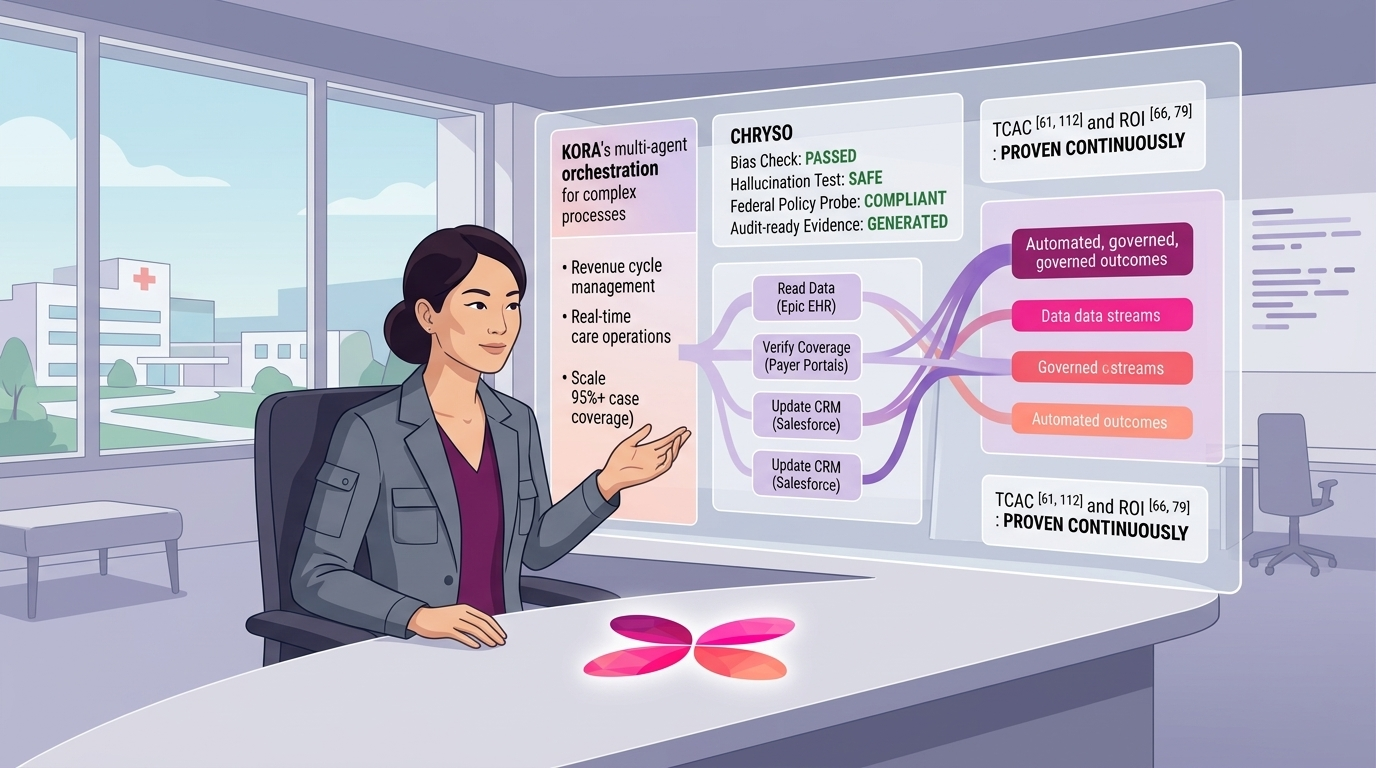
Two things happened in U.S. healthcare AI policy this spring that look opposed but aren't. The federal government moved to deploy AI that can diagnose and prescribe while stripping transparency and testing rules from the tools hospitals already use. At the same time, states are stepping in: Texas, Illinois, Utah, and Colorado all now require the disclosure and oversight Washington just declined to mandate, and four more laws hit on July 1 covering PA/CRNA loan caps, hospital break penalties, PBM reimbursement, and limits on AI in prior-auth denials. The takeaway for AI buyers: deregulation didn't solve the governance problem. It turned it into a 50-state compliance problem, a clinical liability problem, and a trust problem at once. The organizations that built governance into their platform, with audit trails, HITL gates, and approval lifecycles, are the ones who can move fast without creating new risk.
By Deon Metelski·14 min read
Blog
Control the Tokens, Control the Future: Why Consulting Firms Should Hold the Center
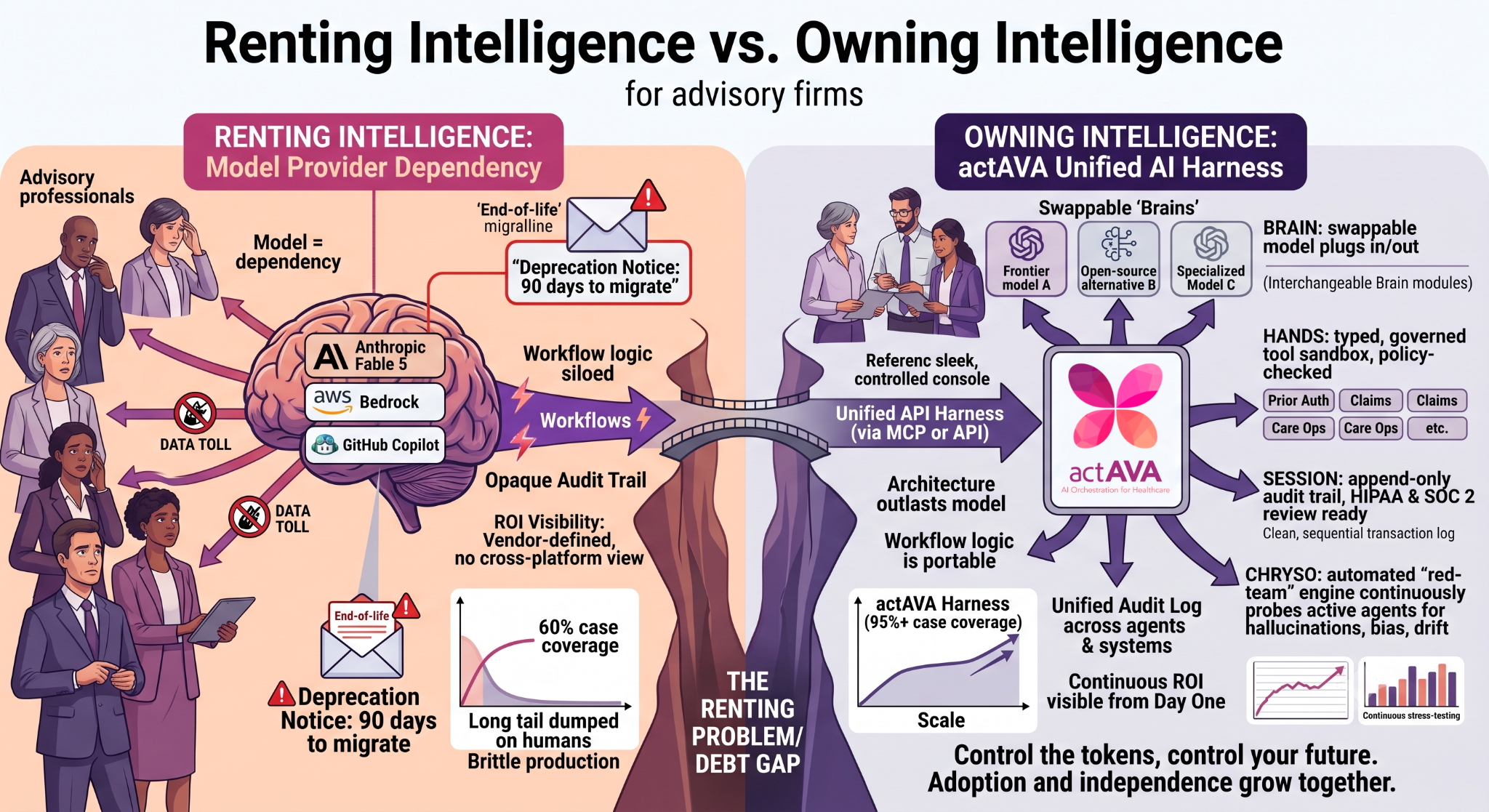
The large advisory firms are right to move fast on AI. The choice worth pausing on is where the dependency lands: who sits at the center of the stack, the firm or the model provider. Most leading providers now build their own services too, which means a firm and its core supplier increasingly share territory. A control plane of your own keeps the important things on your side: the client relationship, the methodology, and the freedom to switch or blend models as pricing and regulation shift. That's one of the ideas actAVA KORA is built around. KORA owns token generation and routes tokens to whichever provider fits the task, so adoption and independence grow together. Control the tokens, control your future.
July 10, 2026·5 min read
Blog
Own Your Long Tail Workflows, Own (some of) Your Inference
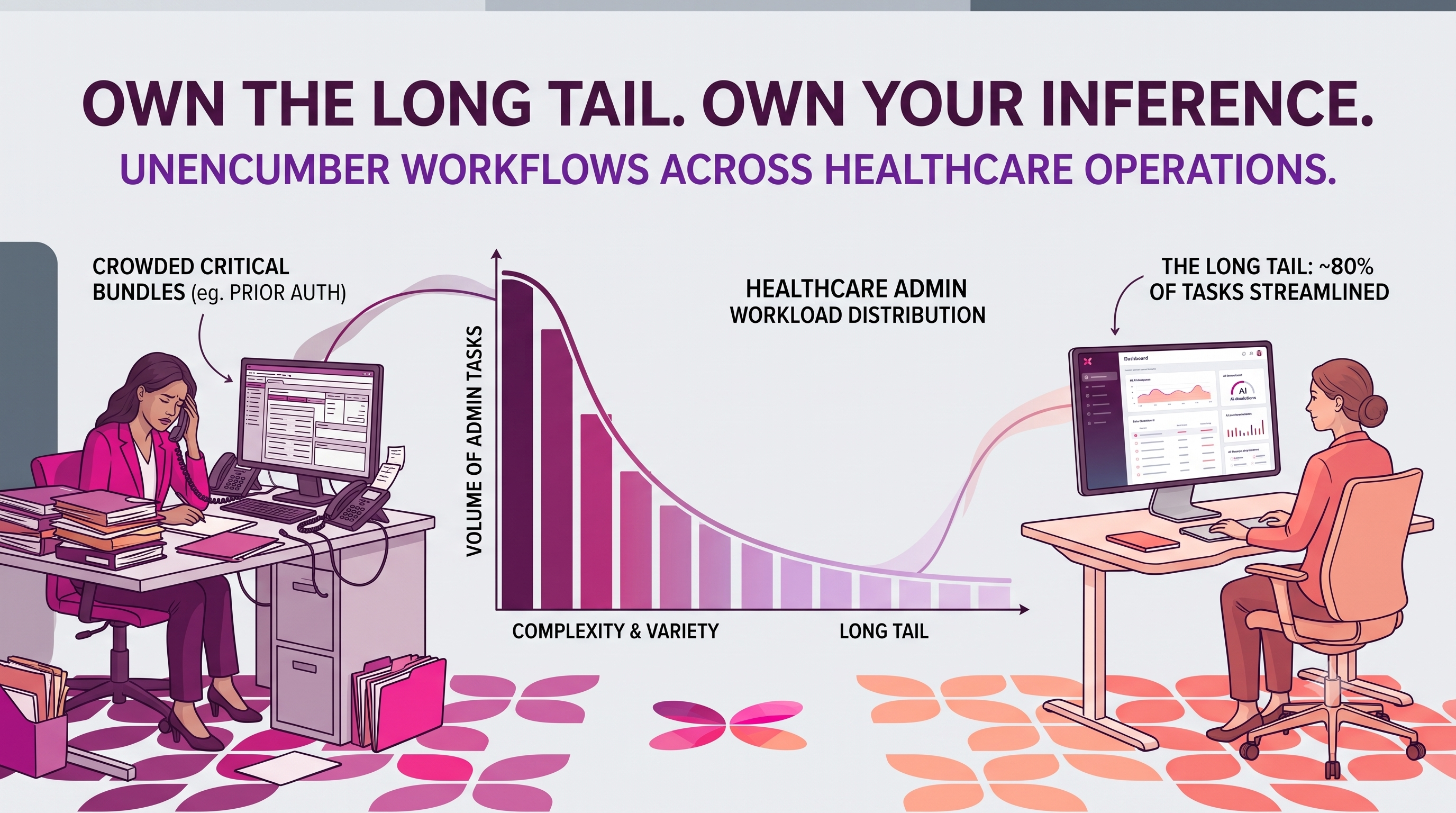
Every AI vendor is crowding into prior authorization, and CMS-0057 is turning it into a commodity feature. Meanwhile 80% of healthcare's administrative work sits untouched, because each of those workflows is too small for anyone to build a company around. That's your long tail, spanning care management, appeals and grievances, enrollment reconciliation, revenue cycle, and provider operations, and it's where your margin leaks and your staff burn out. This piece breaks down why no point solution will ever build for it, why the token economics (a $15 to $25 labor task runs for $1 to $2 in inference) reward whoever owns the workflow and the model calls behind it, and why owning your long tail beats renting yet more point tools.
July 7, 2026·4 min read
Blog
AI Is Advancing Faster Than the Systems Built to Keep It Safe
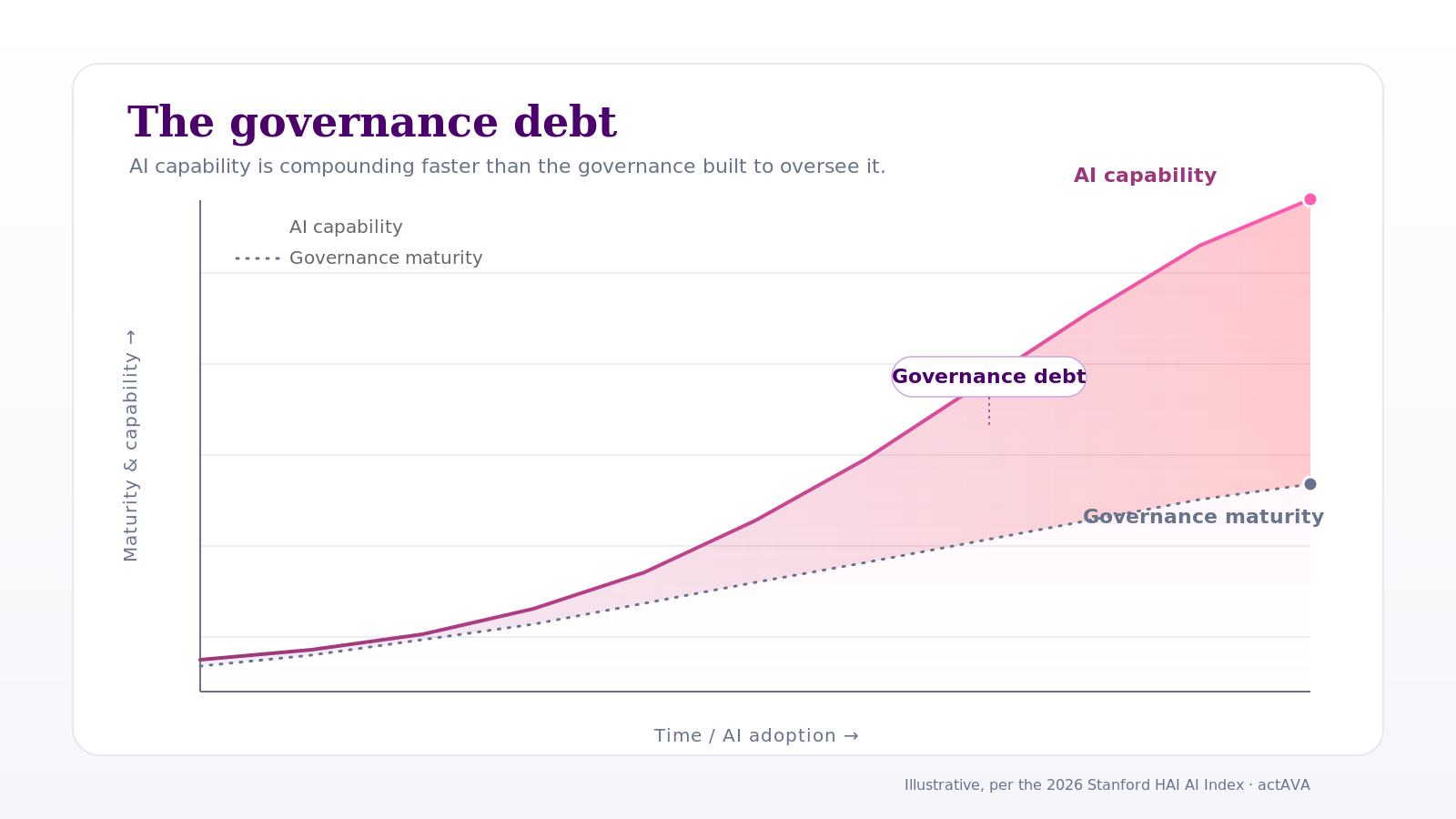
The 2026 Stanford AI Index makes it official: 90% of leading AI models now come from industry, 88% of organizations have adopted AI, and real-world incidents are climbing faster than the controls meant to catch them. In healthcare, that gap shows up as governance debt, accruing quietly with every agent that touches prior auth, clinical decisions, or revenue cycle. Here's how actAVA CHRYSO (automated compliance, evidence, and policy under one roof) and actAVA RED (continuous, production-grade testing for hallucinations, bias, and drift) close that gap before your next audit, incident, or patient interaction.
July 6, 2026·9 min read
Blog
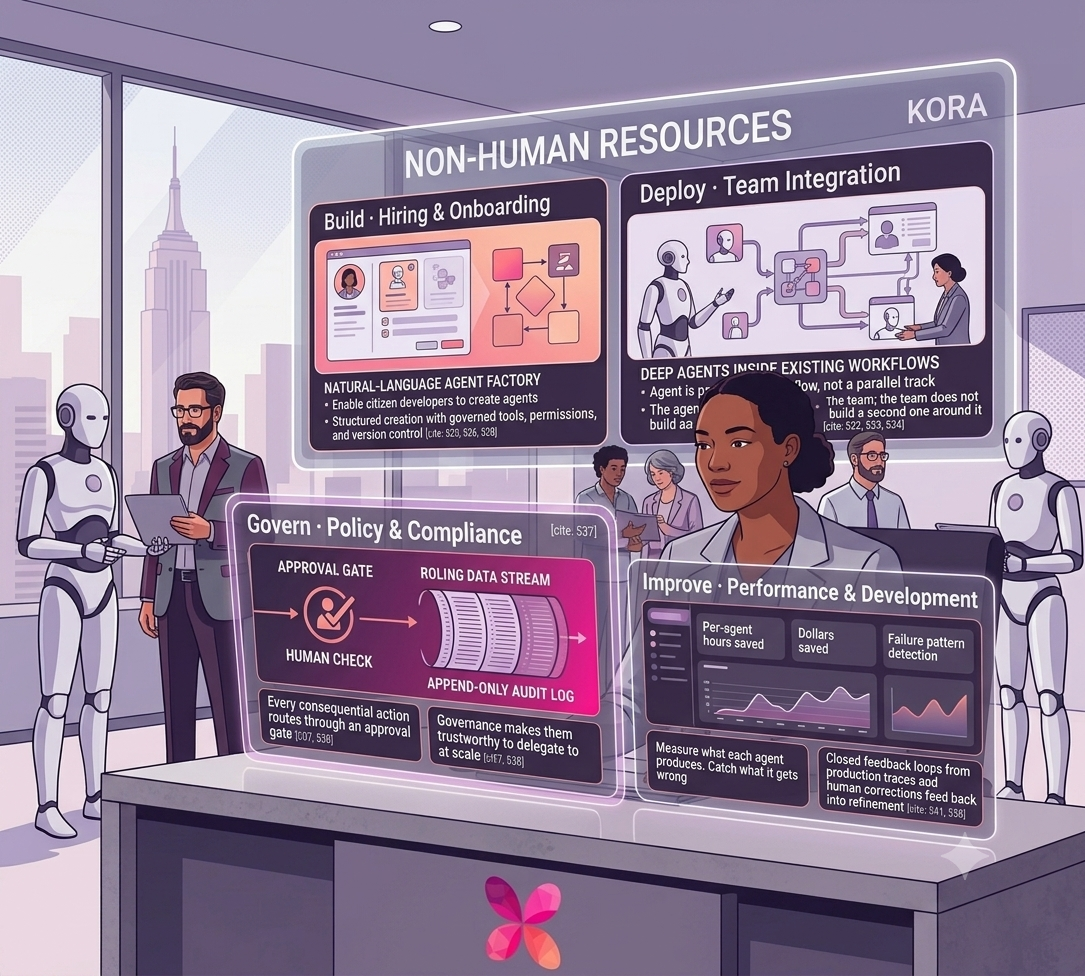
Non-Human Resources: Managing the Workforce That Doesn't Sleep
AI agents are joining org charts. Not as side experiments, but as operational team members taking on real work across real workflows. Around 80% of U.S. workers may see AI affect at least 10% of their tasks, with 19% facing disruption to more than half of their core responsibilities. This is a structural change in how work is organized, not task-level automation. And yet most organizations are treating it as a technology procurement decision rather than a workforce management decision. actAVA's answer is Non-Human Resources: the same Build, Deploy, Govern, and Improve infrastructure that HR provides for people — applied to the AI agents now joining the team.
July 1, 2026·8 min read
Blog
The frontier needs an ecosystem. In healthcare, the harness is how you own it.
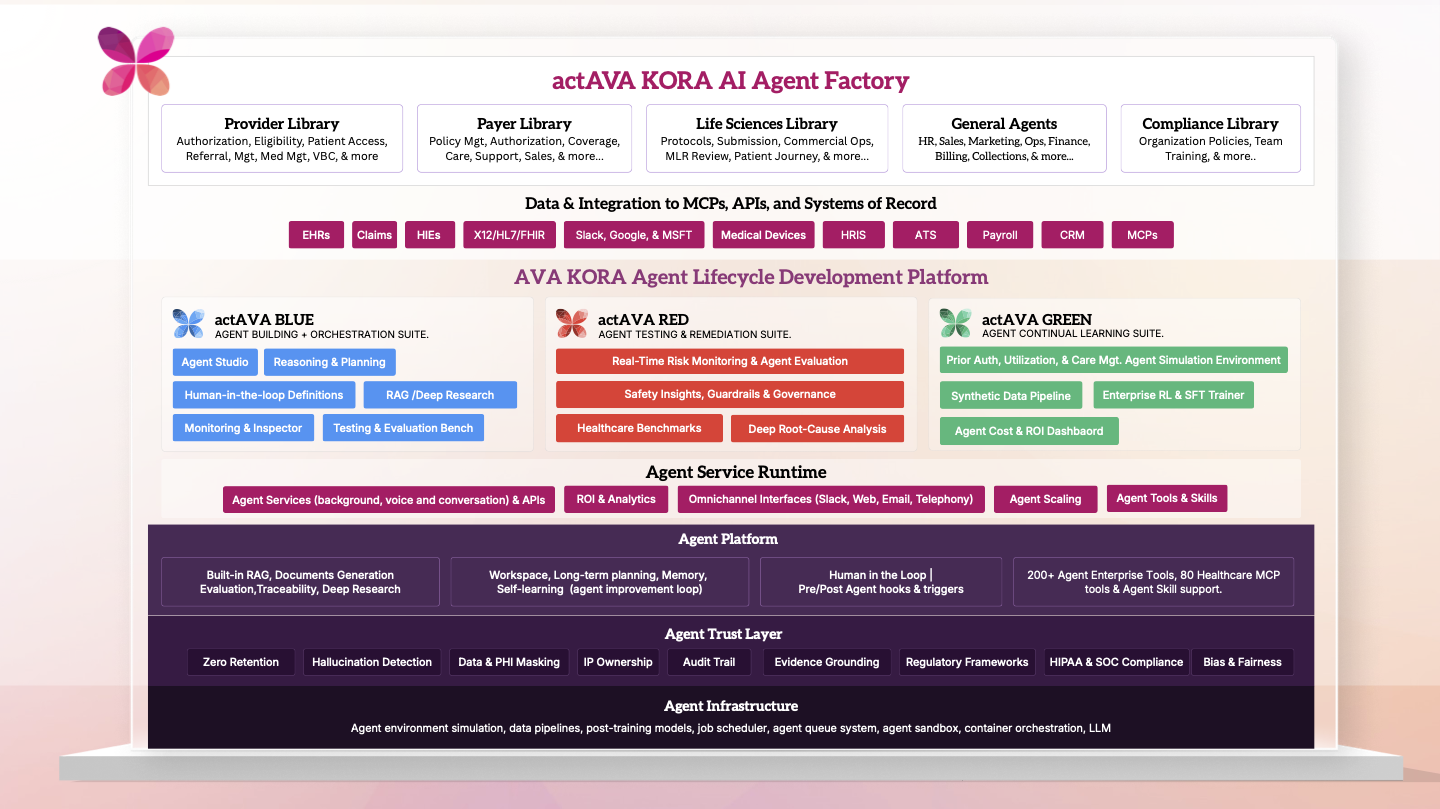
Two signals came out of the frontier this year, and for anyone running AI in healthcare, they say the same thing. Satya Nadella warned that "a frontier without an ecosystem is not stable," because models now learn from how you work, and that expertise can flow back out and get commoditized. In Responsible Scaling Policy v3.0, Anthropic dropped its signature pledge to pause when a model outpaces its own safety measures, shifting the burden of preventing catastrophic failures onto whoever deploys the model. Put together: you can't rent your sovereignty, and you can't rent your safety. The fix is to own the layer between your workflows and the frontier. A learning loop that compounds your institutional expertise so you can swap models without losing your "company veteran," and a compliance harness that contains the model in deterministic infrastructure code, not a vendor's promise. KORA runs on a single spine, where the same component that routes you to a better model also routes you away from a flagged one. That's the layer the frontier can't commoditize, and no policy change can take back.
June 29, 2026·10 min read

Blog
Meet our Advisors: Gabriela Perez
Gabriela Perez is a seasoned, multi-exit senior commercial leader focused on the intersection of healthcare, artificial intelligence, and venture building. When she isn't scaling companies from the inside, Gabriela is fueling the broader tech ecosystem. She serves as a Venture Partner at NextGen Venture Partners, backing next-generation healthcare startups, and supports AI-native healthcare solutions with the venture firm Neo. An alumna of Harvard Business School, Gabriela regularly lends her expertise as a mentor at the Harvard Innovation Labs, helping early-stage founders navigate the complex bottlenecks of scientific R&D, data infrastructure, and enterprise scaling. She is also an advisor to actAVA.ai.
June 26, 2026·7 min read
Blog
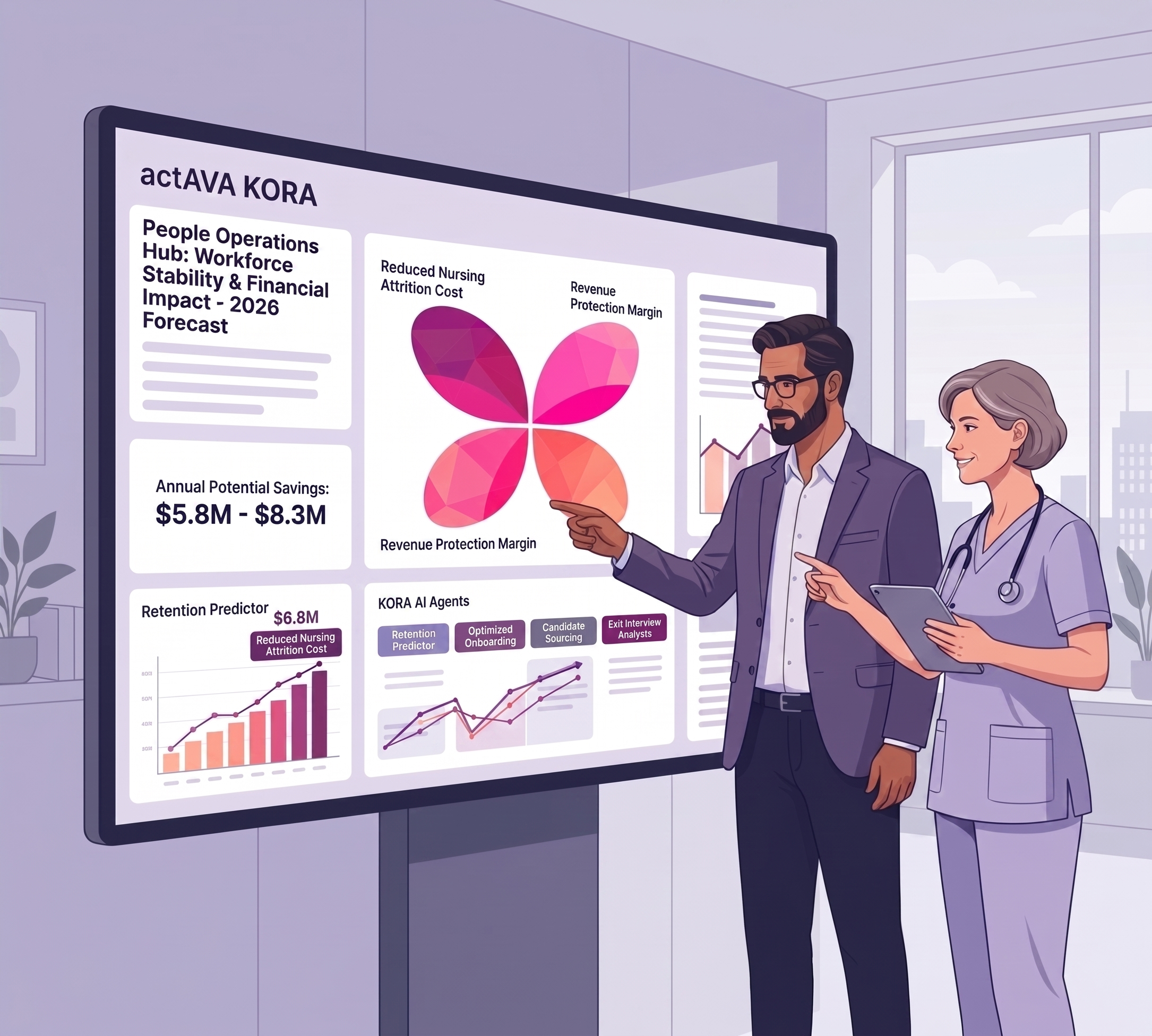
The Hidden Cost of Ignoring HR for Hospitals
Nursing turnover alone drains U.S. hospitals of billions each year. The problem isn't a staffing shortage — it's a people-operations failure. Here's what it costs, where the money goes, and how actAVA.ai's AI agents are built to stop the bleeding.
June 24, 2026·6 min read
Blog
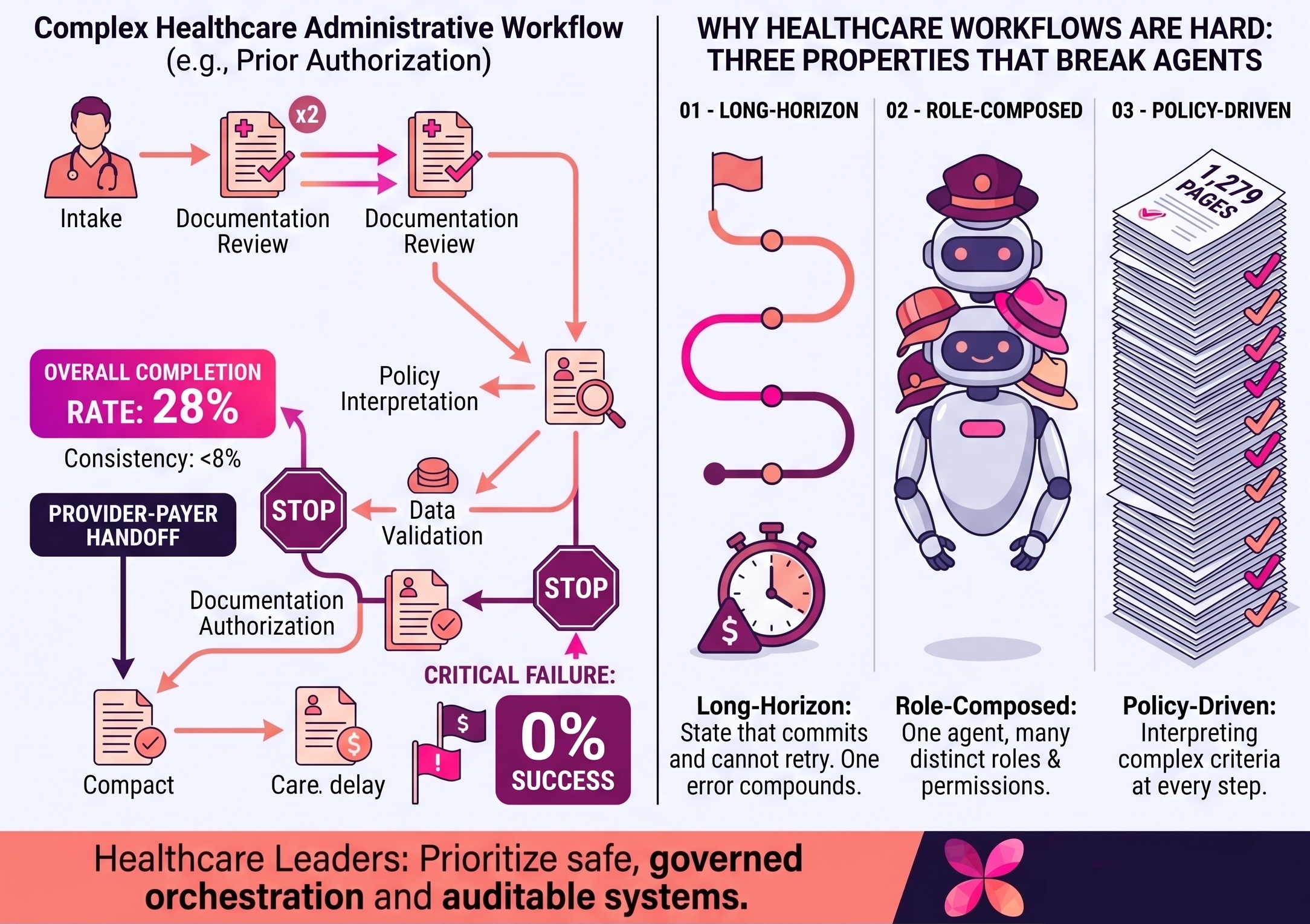
χ-BENCH Update: Frontier Agents Complete Only 28% of Complex Healthcare Workflows
As healthcare operations shift toward agentic AI, actAVA’s new χ-BENCH benchmark reveals that today's frontier agents are not yet ready to run complex workflows independently. Developed alongside leading academic and clinical institutions, the benchmark found that the best-performing agent setup completed only 28% of complex administrative workflows on the first try, consistency never exceeded 8%, and performance dropped to 0% at critical provider-payer handoffs. Because these policy-heavy workflows carry high stakes—where failures can delay care, increase costs, and introduce compliance risks—healthcare leaders must prioritize systems that can be safely measured and governed rather than automating blindly. To address this trust gap, actAVA offers a purpose-built agent-lifecycle platform that provides the orchestration, safety guardrails, and auditability required to reliably scale AI across enterprise operations
June 22, 2026·6 min read

Blog
Meet our Advisors: Dr. Caiming Xiong
Dr. Caiming Xiong stands at the forefront of enterprise artificial intelligence worldwide. A world-class computer scientist and strategic executive, Dr. Xiong is widely celebrated for his unique ability to bridge the gap between abstract, foundational AI research and high-impact, commercial software products. Under his technical stewardship, Salesforce AI Research has evolved from an elite incubation lab into the primary engine powering the intelligence layer of the world’s leading CRM system. By converting bleeding-edge deep learning concepts into production-ready enterprise tools—spanning Large Language Models (LLMs), multimodal systems, and autonomous agentic workflows—Dr. Xiong is actively redefining how global businesses deploy AI to automate complex processes and elevate customer experiences.
June 19, 2026·8 min read

Blog
We are headed to NYC for the 2026 Truist Securities Healthcare Disruptors & Digital Health Conference
The Truist Summit is designed for companies that refuse to do things the way they’ve always been done. At actAVA, we saw a fundamental flaw in how healthcare organizations were approaching AI: companies were trying to manually mine overlapping, hyper-complex regulatory frameworks (such as HIPAA, NIST AI RMF, CMS HEI, and ONC HT1).
June 19, 2026·2 min read
Blog
How to Protect High-Stakes AI Workflows From Model Vendor Turbulence
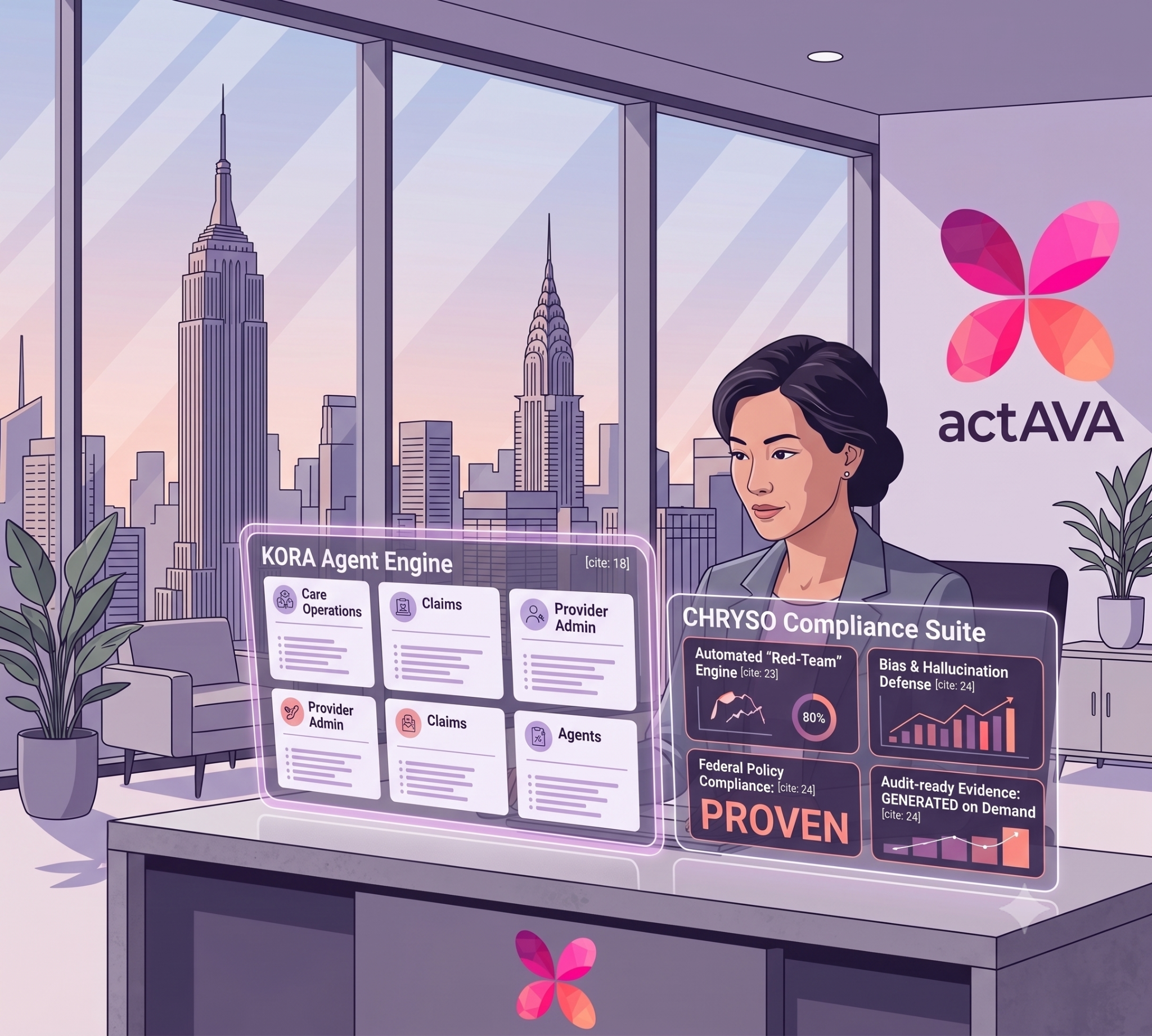
You built agents on a frontier model. You tested it, tuned your prompts around its quirks, trained your team to interpret its outputs. You committed to it. Then the model provider sends an email. Deprecation. End-of-life. Migration deadline in 90 days. The government requires a shutdown. Think it can't happen to you - think again.
June 16, 2026·13 min read
Blog
Why Healthcare AI Needs a Better Benchmark
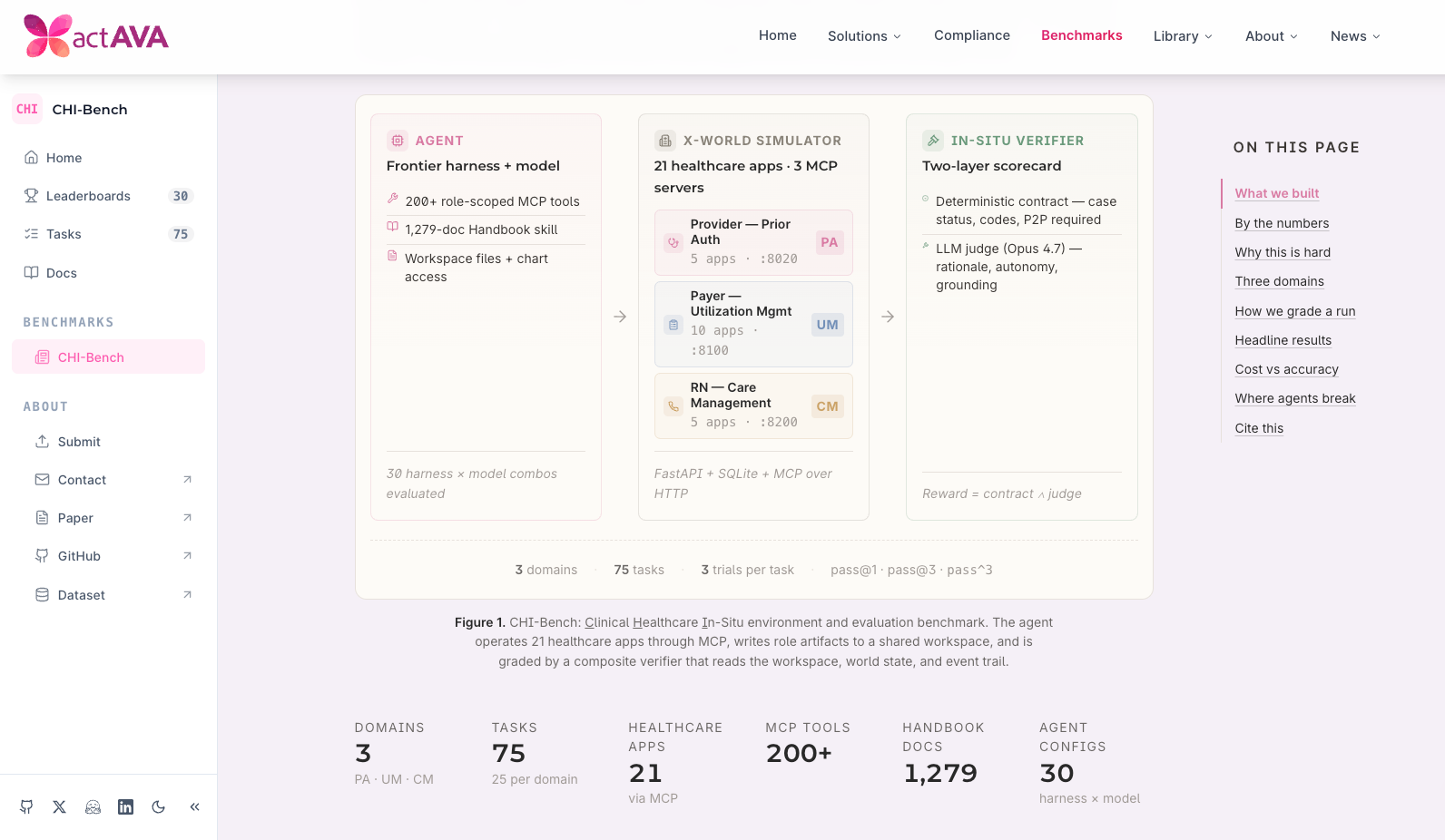
The numbers are out, and they are staggering. U.S. healthcare spending has surpassed $5.3 trillion, accounting for 18% of GDP. But here is the kicker: roughly one in five dollars never actually reaches a patient. Instead, it is swallowed whole by a $1 trillion administrative machinery of billing, credentialing, and the infamous prior authorization (PA) process. While AI agents are being pitched as the ultimate savior for healthcare’s back office, a massive gap remains between tech-vendor promises and real-world execution. Here is a summary of where healthcare administration stands, why current AI solutions are stalling, and how the industry is trying to fix its measurement problem.
June 15, 2026·8 min read