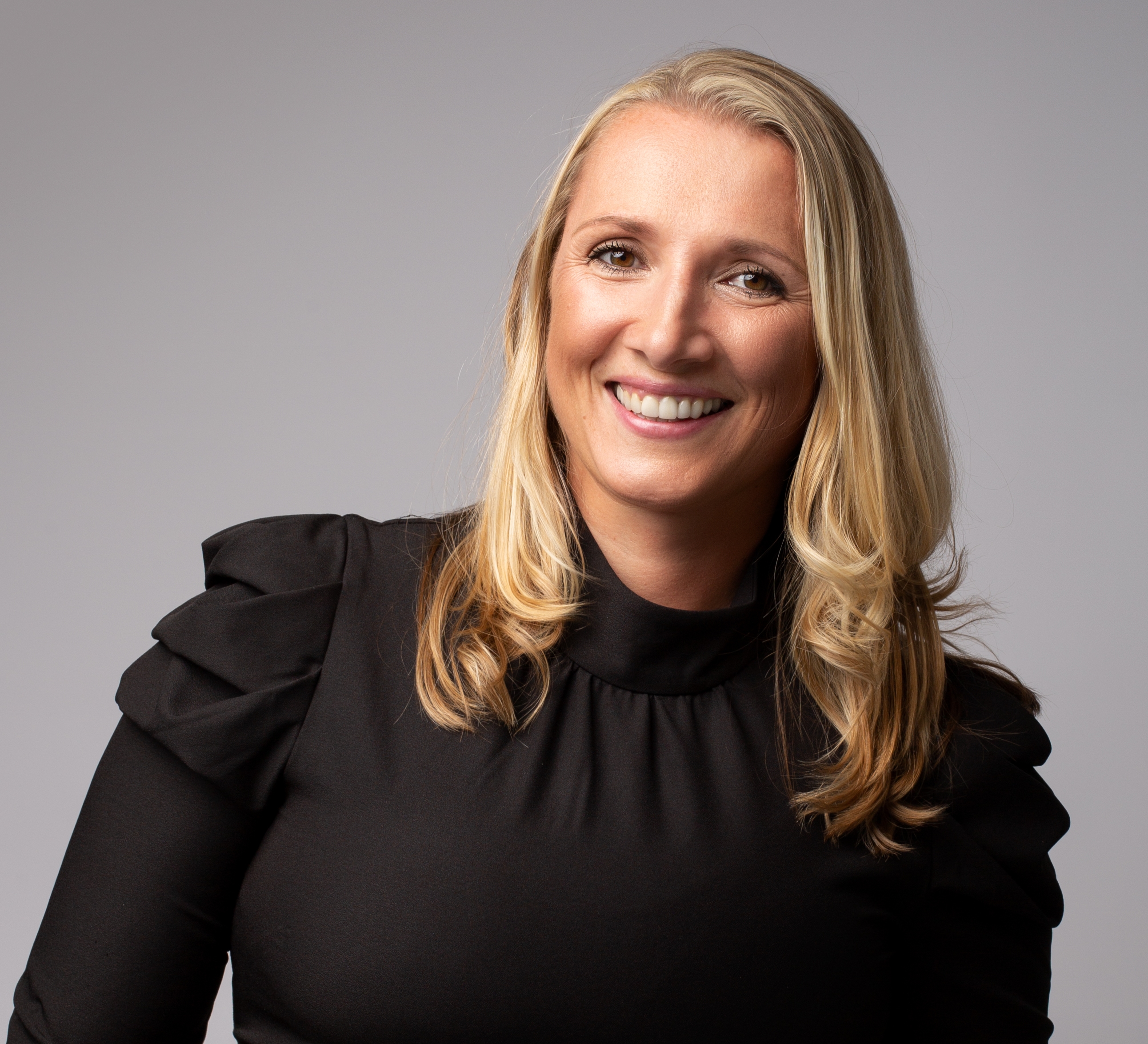
Meet our Advisor: Kyrsten Musich
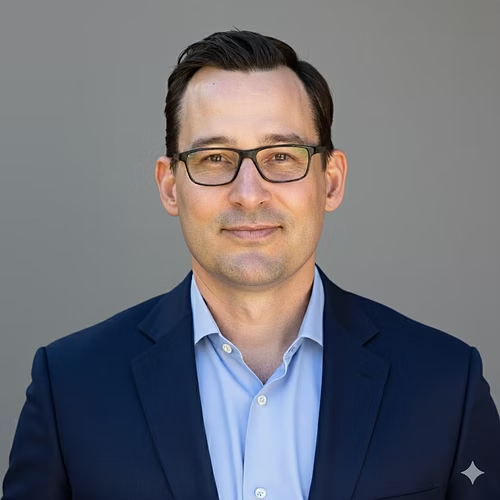 Kevin Riley· CEO & Co-Founder
Kyrsten Musich is the GM of Customer Transformation and Healthcare and Life Sciences Go-To-Market at Salesforce, where she leads AI-driven transformations across pharma, med tech, and healthcare. In this role, she is at the forefront of digital transformation, helping organizations leverage "agentic AI" and cloud-based platforms to streamline clinical workflows, improve patient engagement, and ultimately improve outcomes. Her work focuses on bridging the gap between complex technological capabilities and the practical needs of the healthcare industry, particularly in areas like compliance, R&D, and commercialization.
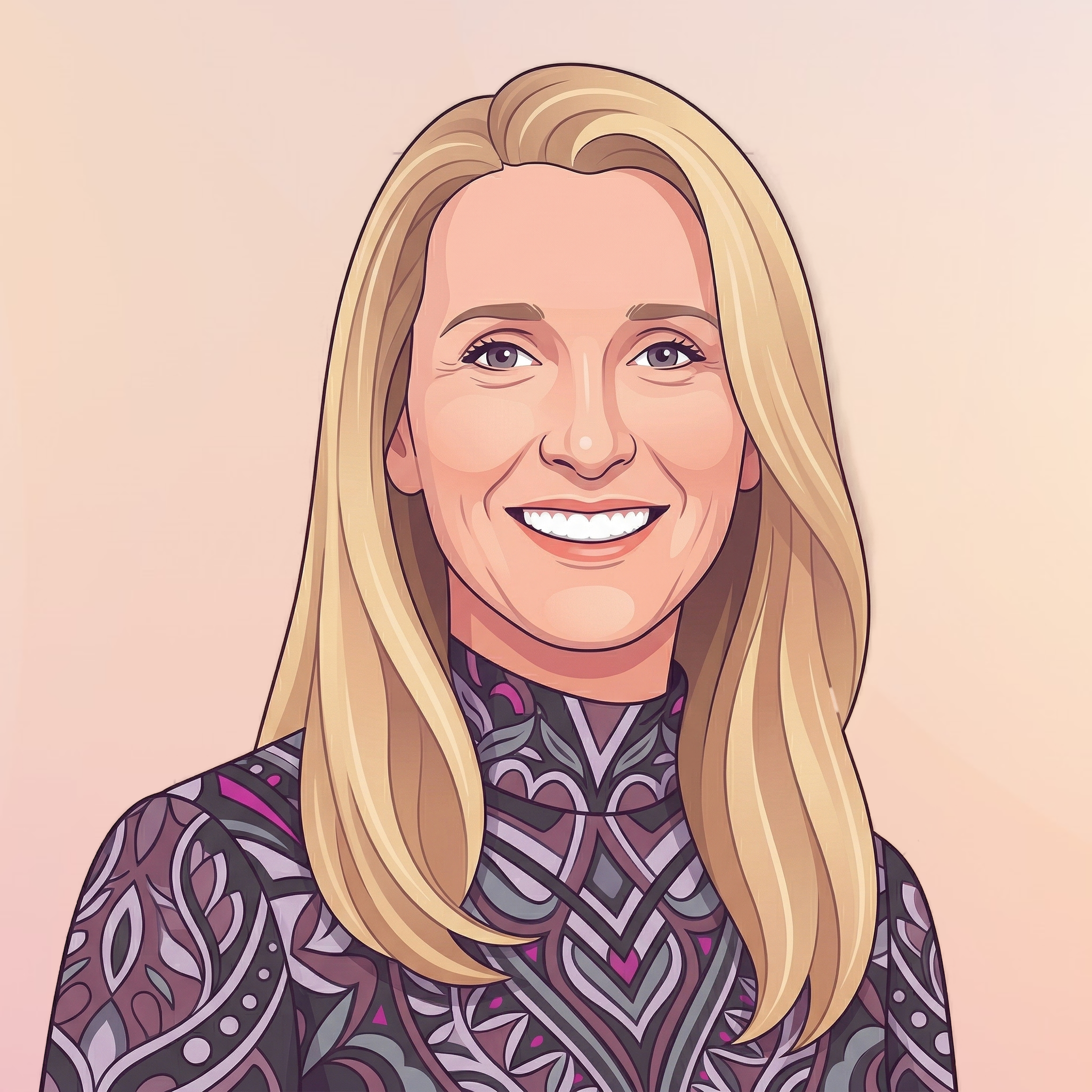
“It is interesting to see how deep AI expertise can come together to deliver speed, accurate results, and compliance in a regulated space like healthcare and life sciences — only a few companies today can bring together all three consistently for customers.”
Today, we are talking to Kyrsten Musich about the new systems large healthcare and life sciences companies need to operate under. We are at a genuine inflection point. For the first time in decades, we have the opportunity to rearchitect the way large healthcare and life sciences organizations actually work — how they support a patient, how they prove the value of a clinical tool, how they free a provider to do what only a human can do. The technology to do this exists. The question is whether organizations are willing to ask the harder question: if you gain three hours of productivity per week, what do you actually do with them?
That question is one Kyrsten Musich puts to every leadership team she works with. It sounds simple. It isn't.
Speed that matches the ambition our healthcare companies have for patient outcomes
The healthcare industry has never lacked data, complexity, or digital tools to address pajama time or other issues plaguing the system. What it has lacked is the ability to turn that data into actionable context at the moment it matters most, and the speed at which they can build safe, compliant, and useful experiences to keep teams of people out of admin and focused on humans. True personalization (not as a marketing concept, but as a clinical and commercial reality) requires orchestrating multiple agents on the backend so that the person at the point of care has exactly what they need, when they need it, without hunting for it or even clicking for it.
When that works, professionals return to what the industry actually needs from them: human-to-human care, clinical expertise, and the kind of judgment no agent can replace. The 40-to-50-hour workweek stops being a hard ceiling on what's possible in patient care and is the reason clinicians burn out. Patient outcomes, looking at data we never could synthesize before, go from pipe dreams to insights through agentic capabilities.
That's the rearchitecture worth designing for — not just faster workflows, but a fundamentally different speed and distribution of effort across the entire ecosystem, from the field rep to the provider to the patient to the data that flows back and makes the next interactions in the ecosystem better, more contextualized, and tied to the specific people involved.
Compliance and reliability around foundational
For years, compliance and reliability were the default justification for avoiding the hard things. The result: everything became hard, and people stopped wanting to engage with the industry at all.
The shift Kyrsten is seeing — and companies like actAVA are driving — is a fundamental reassignment of who owns rules-based work. Technology, it turns out, is better at following rigid guidelines consistently than most humans are. That's not a criticism of people; it's an honest accounting of what each is suited for. When you delegate compliance to the system — embedding it into the workflow rather than bolting it on as a review step — something important happens: you no longer have to choose between innovation and regulation.
Start with the simplest way for someone to interact, whether that's voice, conversational UI, or guided free text. Then build the compliance logic from the start. Suddenly, things that used to be categorically off the table, free-text processing, certain types of specialized reporting, and real-time guidance in the field, become achievable. Middle-office monitoring becomes more scalable and traceable through systems, tools, and digital workers. Risk management becomes something everyone can do without thinking about. Governance travels with the work, not behind it.
This also changes what first-party data is worth. When compliance is embedded and telemetry is built in, organizations can synthesize insights at a scale that was previously impossible, not by adding headcount but by empowering the right people to operate at a level they couldn't before.
Re-architecting capacity to solve problems vs. needing more humans
Capacity is the real conversation. It is the first time we can change the time equation our healthcare ecosystems face.
When Kyrsten works with organizations on AI-driven transformation, she starts with three questions:
If you gain three hours of productivity per week, what is the expected use of those free hours?
How are your teams utilizing new, real-time data insights?
How does this shift impact the next set of ecosystem stakeholders?
The last question is the one most organizations aren't ready for. Reclaimed capacity doesn't stay in one place. A field rep who spends less time on documentation has more time with a provider. A provider with better real-time context has a different conversation with a patient. That patient's outcomes feed back into the data that shapes the next clinical decision. The chain is real, and it only pays off if organizations design it as a value chain or an ecosystem of touchpoints and data intentionally — both at the point of engagement and across the broader ecosystem.
"When productivity equals increased volume and higher-quality engagement," Kyrsten says, "that capacity pays dividends in both cost reduction and revenue uplift."]
More About our Advisor
Kyrsten co-led the largest industry cloud launch in Salesforce history — Life Science Cloud, Salesforce's first agentic cloud — helping grow the Healthcare and Life Sciences business to over $4.47 billion and driving 25%+ growth through a market-defining go-to-market strategy and customer engagement.
Before her current focus on healthcare technology, Musich built a robust career in brand strategy, innovation, and global marketing. She has held executive roles at Red Hat and Ellucian, where she led global teams to accelerate growth and reimagine whole product categories and go-to-market strategies. A graduate of Emory University with an MBA from Duke’s Fuqua School of Business, Musich is recognized as a "problem solver" who combines design thinking with deep strategic insight to help both startups and Fortune 500 companies scale their impact.